

Planning a long ride can be exciting. It’s an opportunity to push your limits, explore new routes, and experience the freedom of cycling. But taking on a big ride, whether it’s a 50-mile road bike adventure, a gravel tour across remote terrain, or a mountain bike trip over steep climbs, requires preparation. Both you and your bike need to be ready.
This guide covers everything from bike setup to packing gear and planning routes, so you can take on any long-distance cycling challenge with confidence.
Why Preparation Matters for a Long Ride
A long-distance bike ride isn’t just about the miles. It’s about maintaining comfort, avoiding mechanical issues, and having a plan for unexpected situations. Without preparation, small problems can turn into major setbacks, from fatigue and discomfort to a ride-ending failure. Taking time for a thorough pre-ride check and planning your route helps you avoid flats, loose bolts, and other disruptions, so you can focus on enjoying the ride instead of troubleshooting problems on the road.
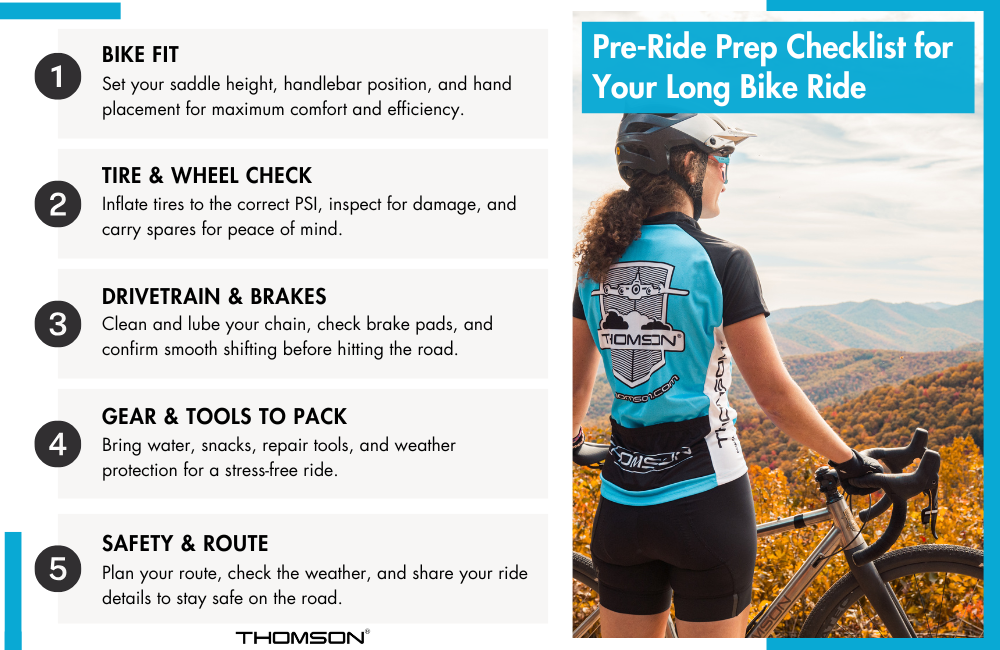
Step 1: Start with a Proper Bike Fit
Your bike fit sets the foundation for comfort and efficiency on any ride, but it becomes even more important as the miles add up.
Why Bike Fit Matters
An improper fit can cause knee pain, numb hands, sore shoulders, and lower back strain. Over a shorter distance, you might manage, but on a century ride or multi-day bike tour, small issues become big problems.
Bike Fit Tips
- Saddle Height: Your leg should have a slight bend at the bottom of the pedal stroke. Too high causes hip rocking; too low stresses your knees.
- Reach and Handlebar Position: Avoid being overly stretched or cramped. Your arms should be slightly bent, and shoulders relaxed.
- Hand Positions: On a road bike, rotate between tops, hoods, and drops during a long ride. For mountain biking, consider bar width and grips for stability and extra comfort.
- Foot Position: Cleats should align with the ball of your foot, and float should allow natural knee movement.
If you plan to carry a heavy load on a rear rack or frame bags, check your fit with the added weight. Extra gear changes your posture.
Step 2: Inspect and Tune Up Your Bike
Before any long-distance cycling, your bike needs a full check. A mechanical failure 40 miles from home is more than inconvenient. It can end the ride altogether.
The Must-Check List
Here’s a quick table to guide your inspection:
| Component | What to Check |
|---|---|
| Tires | Inspect for cuts, sidewall damage, or worn tread. Inflate to correct PSI. |
| Brake Pads | Replace if worn thin or uneven. Test for responsive stopping. |
| Drivetrain | Clean and lube the chain. Check for stretched links or worn cogs. |
| Bolts | Tighten stem, seatpost, crankset, and racks with a torque wrench. |
| Suspension | For a full-suspension bike, confirm sag and check for oil leaks. |
Tires & Wheels
Start by inflating your tires to the recommended PSI using a gauge and pump. Inspect for cuts, cracks, or embedded debris and spin each wheel to check for wobble. Carry spares like tubes, levers, and a pump (or CO₂) for quick roadside fixes.
Drivetrain & Chain
A smooth drivetrain makes a long ride easier and more reliable. Clean and lube the chain, then wipe off excess oil to prevent buildup. Check for chain stretch and worn cogs, and run through your gears to confirm precise shifting.
Brakes & Shifting
Reliable braking is non-negotiable on long rides. Squeeze both brake levers. If they feel soft or travel too far, adjust or bleed them, and replace pads worn to about 3mm or less. Test-shift through all gears to spot hesitation or skipping, which may require minor derailleur tweaks.
Frame, Bolts & Accessories
Walk around the bike and tighten bolts to the correct torque, especially on the stem, handlebars, seatpost, and cranks. Check bottle cages, racks, lights, and pedals to confirm they’re secure. A loose part can rattle off mid-ride and cause issues.
Suspension & Frame (if applicable)
For gravel or mountain bikers, set sag correctly (around 20–30% of travel) and confirm air pressure or spring tension matches your weight. Look for oil leaks and inspect the frame for cracks, dents, or unusual creaks. A damaged frame or loose headset must be fixed before riding.
Upgrade Your Contact Points for Long Rides
Comfort and control start with the right components. Explore Thomson’s precision seatposts, stems, and handlebars to make your next big ride even better.
Step 3: Plan Your Route and Distance
Long-distance riding starts with knowing what you’re getting into. Planning is about the miles, terrain, elevation, and conditions.
Factors to Consider
- Distance: Gradually increase ride length during training rides. Jumping from 20 miles to a 100-mile ride is a recipe for burnout.
- Terrain: A 50-mile gravel ride is more demanding than a 50-mile paved road ride. Include steep climbs in training if your route has them.
- Weather Forecast: Check for rain, wind, or heat. Weather can change fast on long journeys.
- Stops: Identify water refill points and food options. Mark them on your route map.
On multi-day rides or bike tours, research overnight stops, gear storage, and safe places to rest.
Step 4: Pack Smart for the Longer Ride
Packing too much slows you down. Packing too little leaves you stranded. Strike a balance with these essentials for a long bike ride:
Gear Checklist
- Spare Tubes or Tubeless Repair Kit: Flats happen, even on the best tires.
- Mini Pump or CO₂ Inflator: A flat without air support ends the ride.
- Multi-Tool: Tighten bolts and adjust components mid-ride.
- Brake Pads: Carry spares on multi-day bike tours or long gravel routes.
- Water Bottles: Two standard bottles minimum. Consider a hydration pack for big rides.
- Snacks & Electrolytes: Aim for 30–60g carbs per hour of riding.
- Compact Rain Jacket: For sudden weather changes.
- Rear Rack or Frame Bags: Use bike racks for heavy loads or overnight gear.
Gravel roads and backcountry routes require more planning. Extra layers and tire plugs can save your ride when conditions turn rough.
Step 5: Test Before the Big Ride
Don’t wait until your longest ride to try new gear. Test everything in advance:
- Simulate Load: Ride a shorter distance with your rear rack and bags attached.
- Try Fueling: Experiment with snacks and hydration during a training ride to avoid stomach issues on the big day.
- Check Comfort: If anything feels off, such as the saddle, bar tape, or grips, adjust it before the long-distance ride.
Step 6: Train Your Body
Your bike can be ready, but your legs, lungs, and core need to be prepared too.
Long Distance Riding Training Tips
- Follow a Training Plan: Add mileage gradually, about 10–15% per week.
- Mix Terrain: If your ride includes steep climbs, include them in training.
- Monitor Heart Rate: Stay in your endurance zone for most of your rides.
- Strength and Core Work: A strong core improves stability and reduces fatigue.
Endurance builds over time. Avoid the temptation to go from a shorter distance to a century ride in one leap.
Step 7: Ride Comfortably
Comfort on a long distance ride matters as much as fitness. Even small tweaks make a big difference over hours in the saddle.
- Hand Positions: Rotate often to avoid numbness.
- Padded Gloves and Shorts: Reduce pressure points.
- Bike Adjustments: Adjust suspension on a mountain bike for the terrain.
- Steel Frame Advantage: Steel frames and wider tires absorb road vibration better than stiff, lightweight setups.
Step 8: Safety and Common Sense
Long journeys carry risks. Prepare for them:
- Bring ID, Cash, and a Cell Phone: In case of emergencies.
- Lights and Reflective Gear: If riding near dusk.
- Tell Someone Your Route: Share your location if possible.
- Know Your Limits: Pushing through fatigue can lead to mistakes.
Pro Tips from Thomson Bikes
At Thomson Bikes, we’ve spent decades designing components that riders trust for endurance, performance, and reliability. The right preparation and the right gear let you focus on the experience, not the equipment.
- Upgrade Contact Points: High-quality seatposts, stems, and handlebars improve comfort and control during long-distance riding.
- Choose the Right Frame Material: Steel frames offer extra comfort for gravel or touring, while carbon fiber handlebars reduce vibration.
- Plan for Reliability: Invest in high-quality components for strength and accuracy, especially when tackling demanding routes.
Our mission is simple: create products that perform flawlessly so your attention stays on the ride, not the wrench. Prepare your bike, trust your gear, and enjoy every mile ahead.
Find the Perfect Frame for Your Next Adventure
Steel, titanium, or carbon—choose a frame built for endurance and reliability on any terrain.